
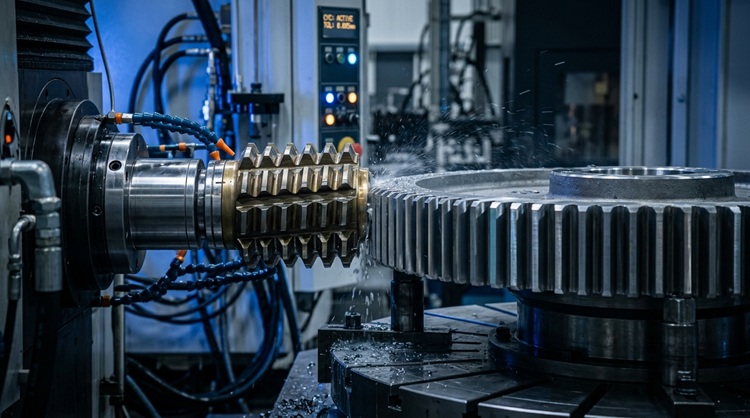
Producing high quality gears requires careful attention to machining accuracy. The shape, spacing, and finish of each tooth can affect how smoothly a gear operates within a mechanical system. For manufacturers, choosing appropriate cutting equipment is therefore an important part of maintaining consistent production.
The right tooling depends on several factors, including gear design, material, machine capabilities, production volume, and required tolerances. Understanding these considerations can help manufacturers make practical decisions and avoid unnecessary production issues.
Why Gear Cutting Quality Matters
Gear teeth need to be produced accurately so that they engage properly with their mating components. Poorly formed teeth can contribute to vibration, noise, uneven wear, and reduced operating efficiency.
Effective machining practices can help manufacturers achieve:
- Consistent tooth geometry
- Accurate dimensions
- Smooth engagement
- Repeatable production
- Reliable surface quality
- Efficient machining
Tool selection is one of several factors that contribute to these results.
Understanding Gear Cutting Tooling
Gear cutting tooling covers the specialized equipment used to produce gear teeth through different machining methods. Depending on the application, manufacturers may use hobbing, shaping, milling, or other suitable processes.
The correct tooling should correspond with the gear specifications and the machine being used. Important details include module, pressure angle, tooth count, gear type, workpiece material, and required accuracy.
Choosing equipment based on these factors can help create a more predictable machining process.
The Role of Gear Hobbing
Hobbing is a commonly used method for generating gear teeth. During the process, the hob and workpiece rotate in a coordinated manner, allowing the teeth to be formed progressively.
This approach can be useful for efficient production of compatible cylindrical gears, particularly when manufacturers need consistent results across multiple components.
The hob must be selected according to the gear’s specifications. An appropriate match between the cutter and workpiece can support better tooth geometry and dependable production performance.
Choosing Reliable Gear Hob Suppliers
Working with experienced gear hob suppliers can make the tooling selection process easier. A supplier with a good understanding of gear manufacturing can help customers identify products that match their machining requirements.
Manufacturers should consider several points when evaluating suppliers:
Product Quality
Consistent manufacturing standards are important when close dimensional accuracy is required.
Application Knowledge
A supplier should understand how different tooling options relate to gear design and machining processes.
Product Availability
A suitable range of tooling can make it easier to find solutions for different gear specifications.
Technical Support
Helpful technical guidance can assist manufacturers in selecting and using tooling correctly.
Factors That Influence Tool Selection
Workpiece Material
Steel, alloy materials, and other workpiece types can place different demands on cutting tools.
Gear Design
The gear’s dimensions, tooth profile, module, and pressure angle all influence tooling requirements.
Production Volume
Large production runs may require tools designed for consistent performance over extended operation.
Machine Setup
Tooling must be compatible with the machine and its operating capabilities.
Accuracy Requirements
The required tolerances and finished gear quality should be considered before selecting a cutting solution.
Maintaining Tool Performance
Proper maintenance can help manufacturers get consistent results from their cutting equipment. Regular inspection can reveal signs of wear before they begin affecting finished components.
Correct machine setup is also important. Alignment, workholding, cutting conditions, and tool positioning should be checked carefully during production.
Safe storage and handling can further help protect cutting edges and maintain tool condition between uses.
Finding the Right Tooling Partner
Manufacturers benefit from working with a tooling provider that understands their production goals. A reliable partner can help evaluate gear specifications and identify suitable cutting solutions for the application.
SS Tools provides gear cutting solutions for industrial manufacturing requirements. Its product offerings can be evaluated according to the gear design, machining method, machine configuration, and production needs.
Conclusion
Consistent gear manufacturing begins with appropriate machining practices and carefully selected equipment. The right gear cutting tooling can help manufacturers achieve accurate and repeatable tooth profiles, while dependable gear hob suppliers can provide suitable solutions for specific hobbing requirements.
By considering gear specifications, material, production volume, machine compatibility, and accuracy, manufacturers can make informed tooling decisions and build a more reliable gear production process.